

Department of Biomedical Engineering

The Department of Biomedical Engineering at SSIET is dedicated to integrating engineering principleswith medical sciences to develop innovative healthcare solutions. Established with a vision toadvance modern medicine through technology, the department offers a strong foundation in areassuch as biomedical instrumentation, medical imaging, and biomaterials.

It emphasizes hands-onlearning through advanced laboratories and real-time clinical exposure. Students gain practicalexperience through internships, industry collaborations, and research-driven projects. Thecurriculum is designed to meet evolving healthcare demands, including AI in medicine and digitalhealth systems. With a focus on innovation, ethics, and excellence, the department preparesgraduates for impactful careers in healthcare, research, and medical technology industries.

A Legacy of Innovation & Ethics

28

Years of Excellence

Established in 2018, Building a Future of Advanced Healthcare Solutions.

Advancing Healthcare Innovation

Fostering technical excellence inbiomedical instrumentation, medical maging, biosignal processing, and healthcare technologies to improve patient care and medical outcomes.

Integrating Engineering With Medical Sciences

Blending core engineering fundamentals with advanced biomedical such as biomaterials. tissue engineering, clinical engineering, and healthcare analytics through hands-on learning.

Developing Industry-ready Professionals

Equipping students with practical skills in medical devices, diagnostics, and hospital systems to lead in modern healthcare, research, and life saving innovations.

Academic Pathways: Built for Industry 4.0

The Biomedical Engineering program is designed to bridge engineering innovation with modern healthcare needs, preparing students to develop life-saving technologies. It provides astrong foundation in biomedical instrumentation, medical imaging, biomaterials, andbiosignal processing. The curriculum emphasizes hands-on learning through advanced laboratories, clinical exposure, and industry collaborations. Students gain expertise in designing medical devices, analyzing healthcare data, and improving diagnostic and therapeutic systems. With a focus on research, innovation, and real-world applications, theprogram nurtures problem-solving skills for healthcare challenges. Graduates are well-equipped for careers in medical technology, hospitals, research organizations, and healthcare industries.

B.E Biomedical Engineering

Core Focus: Biomedical Instrumentation & Measurement, Medical Imaging Systems & Signal Processing, Biomaterials & Tissue Engineering, Biomedicine Electronics & Microcontrollers, Clinical Engineering & Hospital Systems, Rehabilitation Engineering & Assistive Technologies
Outcome: Design innovative medical devices, improvehealthcare solutions, and contribute tobetter patient care through engineeringexcellence and research.

Advanced Biomedical Specialization / Industry Track

Core Focus: Advanced Medical Devices & Smart Healthcare Systems, Healthcare Data Analytics & Ai in Medicine, Biosignal Processing(ECG/EEG/EMG & Beyond), Regulatory Affairs & Quality in Medical Devices, Healthcare Management & Digital Health Technologies
Outcome: Gain advanced skills and interdisciplinaryexpertise to lead in healthcare innovation,research, and industry-driven solutionsfor global impact.
Featuring an AI-Driven, Industry-Aligned Curriculum built for Industry 4.0 through a flexible Choice-Based Credit System (CBCS).

Industry-Aligned & AI-Driven Curriculum

The Biomedical Engineering curriculum is designed to integrate core engineering principles with advanced healthcare technologies to address real-world medical challenges. It covers key areas suchas biomedical instrumentation, medical imaging, biomaterials, and clinical engineering. The programemphasizes hands-on training, industry collaboration, and clinical exposure to build practical skills. Graduates are equipped to innovate, design, and improve healthcare systems, preparing them for impactful careers in medical and research industries.
"Choice-Based Credit System (CBCS) creating adaptable problem- solvers for healthcare, agriculture, and industry."
Download Full Syllabus

Dedicated Mentorship. Award-Winning Faculty.

Excellence in Teaching & Research Recognition

Our faculty are recognized for their outstanding teaching,research, and contributions to the biomedical engineering community.

High-impact Publications

Faculty drive innovation through high-impact publications in reputed international journals.

Industry-Integrated Learning

Integration of advanced laboratories, clinical exposure, industry collaborations, and hands-on project training for real-world biomedical solutions.

The Innovation Engine: 9 State-of-the-Art Specialized Laboratories

The Biomedical Engineering laboratories provide hands-on training in advanced medical technologies and real-world healthcare applications. Students gain practical experience in areas such as biomedical instrumentation, medical imaging, biosignal processing, and biomaterials. The labs aredesigned to support innovation, research, and the development of life-saving solutions. This practical exposure equips students with industry-ready skills for careers in healthcare, research, and medical technology sectors.

Biomedical Instrumentation Laboratory

Hands-on with sensors, transducers, and measurement systems forbiomedical applications.

Medical Imaging Laboratory

Training in imaging modalities such as x-ray, CT, MRI, and ultrasound systems.

Biosignal Processing Laboratory

Analysis of ECG, EEG, EMG and other physiological signals using advanced
hardware and software.

Biomaterials & Tissue Engineering Laboratory

Exploring biomaterials, scaffolds, and tissue engineering techniques for regenerative medicine.

Biomedical Electronics Laboratory

Design and testing of biomedical circuits and devices for health care applications.

Clinical Engineering Laboratory

Maintenance, calibration,and safety testing of medical equipment used in healthcare settings.

Biotechnology Laboratory

Hands-on training in molecular biology, cellculture techniques, and bioprcoessing.

Rehabilitation Engineering Laboratory

Development and testing of assistive devices and rehabilitation technologies for improved mobility.

Healthcare Data Analytics Laboratory

Applying data analytics and A1 tools to healthcare data for decision supportand predictive modeling.

Explore Our Research Facilities

The Biomedical Engineering research facilities provide advanced infrastructure for hands-on learningand innovation in healthcare technologies. Students gain practical experience in areas such asmedical imaging, biosignal processing, biomaterials, and clinical engineering. These facilities fosterresearch, collaboration, and the development of impactful solutions for real-world medical challenges.

Biomedical Instrumentation Laboratory

Hands-on experience with sensors,transducers, measurement systems,and biomedical devices.

Medical Imaging Laboratory

Training in imaging modalities such as x-ray, CT, MRI, and ultrasound systems.

Biosignal Processing Laboratory

Analysis of ECG, EEG, EMG and other physiological signals using advanced
hardware and software.

Biomaterials & Tissue Engineering Laboratory

Exploring biomaterials, scaffolds, and tissue engineering techniques for regenerative medicine.

Biomedical Electronics Laboratory

Design and testing of analog/digitalcircuits and embedded systems for healthcare applications.

Clinical Engineering Laboratory

Maintenance, calibration, safety testing and quality control ofmedical equipment.

Rehabilitation Engineering Laboratory

Development and testing of assistive devices and rehabilitation technologies for improved mobility.

Healthcare Data Analytics Laboratory

Applying machine learning and data analytics to healthcare data for decision support.

The Innovation Culture:
From Lab to Patent

The Biomedical Engineering innovation culture empowers students to transform ideas into impactfulhealthcare solutions through a structured process of discovery, development, and validation. Itemphasizes identifying real-world medical challenges and applying engineering principles to designeffective solutions. Students engage in research, prototyping, and testing to ensure safety,efficiency, and reliability. This approach fosters innovation, leading to patents, publications, andmeaningful contributions to modern healthcare.

Discover Phase

Identify unmet healthcare needs and real-world biomedical challenges through research,observation, and data-driven insights to spark innovative ideas.

Develop & Optimize Phase

Design, develop, and optimize biomedical solutions using advanced technologies, AI/ML models, and experimental validation to ensure efficiency,safety, and scalability.

Protect & Commercialize Phase

  • Protect innovations through patents and translate them into impactful biomedical products and solutions.
  • Ensure regulatory compliance, ethical standards, and patient safety in every step.
  • Drive technology transfer and collaboration for real-world healthcare impact.

Research & Innovation Output

Innovation & Patents

Transforming ideas into intellectual property and innovative biomedical engineering solutions for real-world healthcare challenges.

Highlight: Development of a smart wearable biosignal monitoring system for real-time patient tracking and alerts.
Status: Patent Filed (Indian Patent Application No. 202541012345)
Inventor: Dr. Premkumar & Research Team
Details: A non-invasive, IoT-enabled system integrating biosensors, A1 algorithms, and cloud analytics for continuous health monitoring and early diagnosis.

High-Impact Publications

Publishing research that advances biomedical engineering knowledge and addresses key challenges in healthcare, medical technology, and biomaterials.

Highlight: Publications in reputed international journals in emerging biomedical domains.

Key Research Areas:

  • Biomedical Signal Processing & A1
  • Medical Imaging & Image Analysis
  • Biomaterials & Tissue Engineering
  • Rehabilitation Engineering
  • Biosensors & Wearable Devices
  • Clinical Engineering & Healthcare Technology
  • Computational Biology & Bioinformatics
  • Drug Delivery & Nanomedicine
  • Healthcare Data Analytics & Machine Learning
  • A1 for Diagnostics & Prognostics

Industrial-Grade Facilities & Resources

High-performance Computing Systems

Workstations with Intel Core / Xeon processors, 64GB-128GB RAM, ITB SSD / 2TB NVMe.

Dedicated Cloud &Network Infrastructure

Cloud servers with 24x7 Uptime. 10 KVA UPS backup and redundant connectivity for reliability.

Advanced & Secure Environment

Licensed software, pre-configured A1/ML and biomedical tools, secure data storage, lab safety protocols, and access control.

High-speed Internet Connectivity

100 Mbps dedicated internet bandwidth for seamless learning,research, and collaboration.

Technical Facilities & Digital Integration

Core Equipment Capabilities

  1. High Performance Workstations
  2. Networking & Secure Lab Setup
  3. Servers & Virtualization Infrastructure
  4. IoT & Embedded Systems Kit
  5. Biomedical Sensors & Data Acquisition
  6. Smart Boards & Collaboration Tools

Digital Integration Features

Google Colab Integration

Cloud-based coding & data science platform for seamless learning, experimentation & collaboration.

GitHub Integration

Version control, collaboration,
project hosting & portfolio building
for real-world development.

100% Mandatory Internships

(Sem 1–2)

Foundations

Core biornedical concepts
including human anatomy&
physiology, biomaterials,
biochemistry, bioinformatics,
instrumentation, biostatistics.
(Sem 3)

The Catalyst

Mandatory internship activation
for all biomedical engineering
students with exposure to real-time labs, clinical environments, and
industry workflows.

Application

Hands-on training in biomedical
technologies, data analysis, medical
imaging, biosignal processing,
AI/ML applications, and
regulatory practices.

Industry Immersion

Internships and placements with
leading hospitals, biotech firms,
medical device companies,
research labs, and healthcare
startups forreal-world impact.

The Immersion Mandate

Integrated industry immersion starting from the 3rd semester for all students.
Tata Consultancy
Services (TCS)
Accenture
Solutions
Amazon Development
Centre
IBM India
Thermo Fisher Scientific
Dr. Reddy's
Laboratories
Cipla Limited
Infosys
Limited
Capgemini Technology
Services
Microsoft nIndia
Dell Technologies
B. Braun
Medical India
Sun Pharma
GSK
Pharmaceuticals
Wipro Limited
Cognizant Technology
Solutions
Google India
Zoho Corporation
Medtronic
India
bioMérieux
India
Biocon
Limited
HCL
Technologies
Tech Mahindra
Limited
Oracle
India
Persistent
Systems
Siemens
Healthineers
Novartis
India
Aurobindo
Pharma

Placement Opportunities

Scrolling Image Scrolling Image Scrolling Image Scrolling Image Scrolling Image Scrolling Image Scrolling Image Scrolling Image Scrolling Image Scrolling Image Scrolling Image Scrolling Image Scrolling Image Scrolling Image Scrolling Image Scrolling Image Scrolling Image Scrolling Image Scrolling Image Scrolling Image

Unstoppable Placement Momentum

Achievements & Student Life

The Biomedical Engineering department fosters a vibrant student ecosystem that balances academic excellence with innovation and real-world exposure. Students actively participate in workshops, research activities, hospital visits, and technical events, gaining hands-on experience in medical technologies. The department encourages creativity through hackathons, project competitions, and interdisciplinary collaboration. With strong mentorship and industry interaction, students develop both technical and professional skills. This holistic environment prepares them to become future-ready biomedical engineers contributing to healthcare advancements.
Elite – Academic Wins
  • Top University Rankings
  • GATE & IES Top Performers
  • NPTEL Elite (Gold Top 2%)
    & Elite Silver (Top 5%)
  • Hackathon Champions
  • Coding Contest Winners
  • Research Paper Publications
    in Reputed Journals
  • Patents Filed & Published
Campus Life
A dynamic campus that encourages curiosity, collaboration and innovation beyond classrooms.
  • Biomedical Tech Talks by Industry Experts
  • Workshops on Medical Devices & Simulation
  • Hands-on Training in Labs & Fabrication
  • Coding Clubs & Peer Learning
  • Research Seminars & Journal Clubs
  • Innovation Challenges & Tech Fests
  • Industrial Visits & Hospital Exposure
Extracurricular Excellence
Students excel in national competition,
hackathons and technical events.
  • Smart India Hackathon Winners
  • Best Project Awards
  • National Level Coding &
    A1/ML Com titions
  • RoboMed & MedTech Challenges
  • Research Seminars & Journal Clubs
  • Poster & Paper Presentations

A Vibrant Ecosystem of Innovation

The Biomedical Engineering ecosystem fosters a dynamic environment that integrates hands-onlearning, innovation, and real-world healthcare applications. Students actively engage in projects,workshops, hackathons, and research activities focused on solving medical challenges. The programpromotes collaboration through expert talks, industry interactions, and interdisciplinary teamwork.This holistic approach equips students with the skills, creativity, and practical exposure needed tobuild impactful careers in biomedical and healthcare industries.

Hands-on Learning

State-of-the-art labs, practical sessions and real-world projects to build strong biomedical fundamentals.

Projects & Innovation

National & global hackathons
that challenge creativity,
enhance problem-solving and
reward excellence.

Hackathons & Competitions

National & global hackathons that challenge creativity, enhance problem-solving and reward excellence.

Expert Talks & Industry Interaction

Learn from industry experts, doctors and researchers about latest trends, technologies and career opportunities.

Research & Publications

Encouraging research, publications and innovative ideas that create impact in healthcare and society.

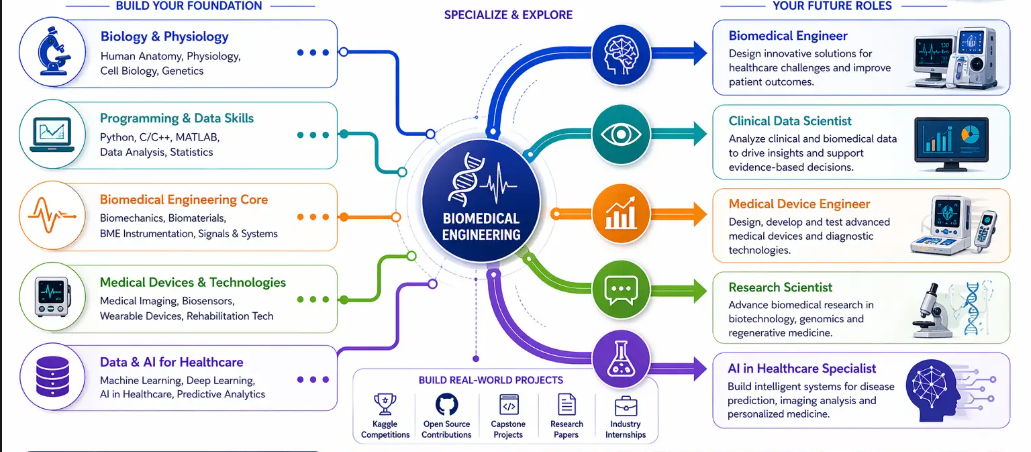
Mapping Your Career Trajectory

The CSBS Career Pathways framework equips students with a balanced blend of computing knowledge and business acumen, preparing them for dynamic roles in the digital economy. It buildsstrong foundations in programming, data management, analytics, and enterprise systems while emphasizing real-world problem solving. Students explore specialized domains through projects,internships, and industry-integrated learning experiences. Overall, the program shapes versatile professionals capable of driving innovation, strategic decision-making, and business transformation.

Driven by Excellence. Defined by Success.

Career prospects in Biomedical Engineering

B.E. Biomedical Engineering offers diverse career paths across medical device manufacturing,healthcare IT, hospitals, and government research. Graduates can work as embedded systemsengineers, medical data analysts, clinical engineers, or research scientists. Leading recruiters includeSiemens, GE Healthcare, Medtronic, Infosys, Wipro, AIIMS, DRDO, and CSIR labs. Entry-level salariesrange from Rs. 12 LPA in device manufacturing to Rs. 9 LPA in government and research sectors.
View More

Faculty Expertise and Mentorship

The Biomedical Engineering department is supported by a team of highly qualified and experiencedfaculty with expertise in both engineering principles and healthcare technologies. Faculty membersspecialize in areas such as biomedical instrumentation, medical imaging, biomaterials, biosignalprocessing, and healthcare analytics. They actively engage in research, publications, funded projects,and industry collaborations to stay aligned with emerging medical and technological advancements.

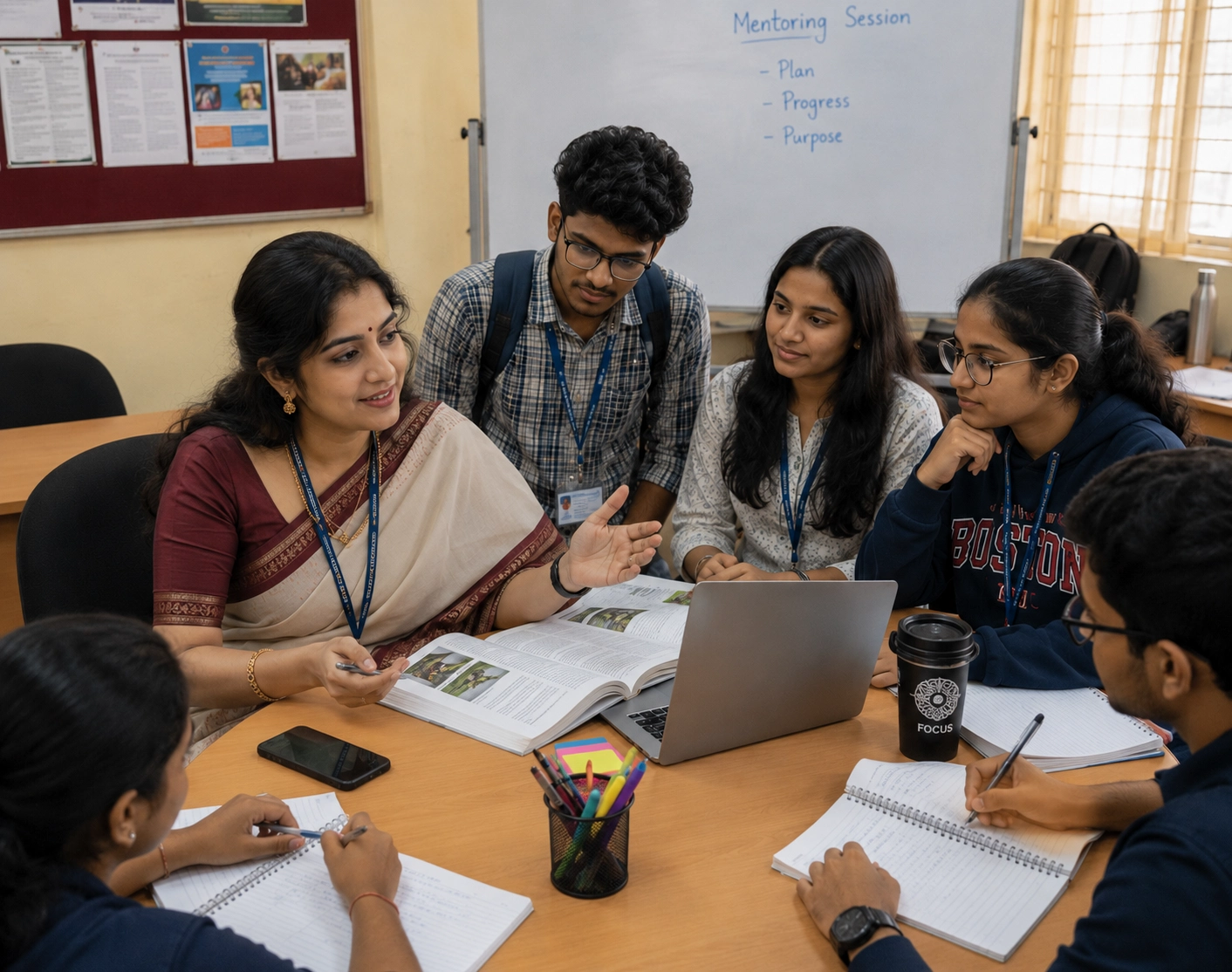
Through a structured mentorship approach, students receive personalized guidance in academics,clinical exposure, projects, internships, and career development. Faculty promote experientiallearning through laboratory work, case studies, hospital training, and interdisciplinary researchactivities. This strong mentorship framework ensures students develop problem-solving skills,technical expertise, and innovation capabilities required for successful careers in the healthcare andbiomedical industry.

Admission Guidance

Students interested in pursuing biotechnology education at SSIET can apply through the Tamil Nadu Engineering Admissions (TNEA) counseling process.


The department welcomes aspiring students who are passionate about biological sciences and technological innovation.


With its strong academic foundation, research-oriented environment, and industry connections, the Department of Biotechnology at SSIET provides an ideal platform for students to build successful careers in biotechnology and life sciences.
Thank you! Your submission has been received!
Oops! Something went wrong while submitting the form.